


Beyond a Nature Walk
Association News, Featured, Member News, TrailsHow the Glacier Way Interpretive Trail Experience Celebrates Washoe History and Heritage
By Cynthia Cendreda
The land on which much of Tahoe Donner stands was once part of the Dit’ eh hu’, or vast ancestral territory of the Waší∙šiw (Washoe) people, encompassing the western arid Great Basin region of Nevada and the forested Sierra Nevada Mountains in California. For thousands of years, the tribe lived in harmony with the natural cycles of Da ow aga, or Lake Tahoe and its periphery. Long before the California Gold Rush brought European settlers to the area, the Washoe were deeply connected to the environment and their way of life profoundly influenced by each season’s unique bounty.
To learn about their subsistence way of life, which endured for millennia before industrialization gave way to modern society, is to appreciate (and hopefully internalize) what peaceful coexistence with nature can sustain, at the individual and societal levels. It is this community and sustainability mindset, intrinsic to the Washoe Tribe, that remains Tahoe Donner’s inspiration for the Glacier Way Interpretive Trail.
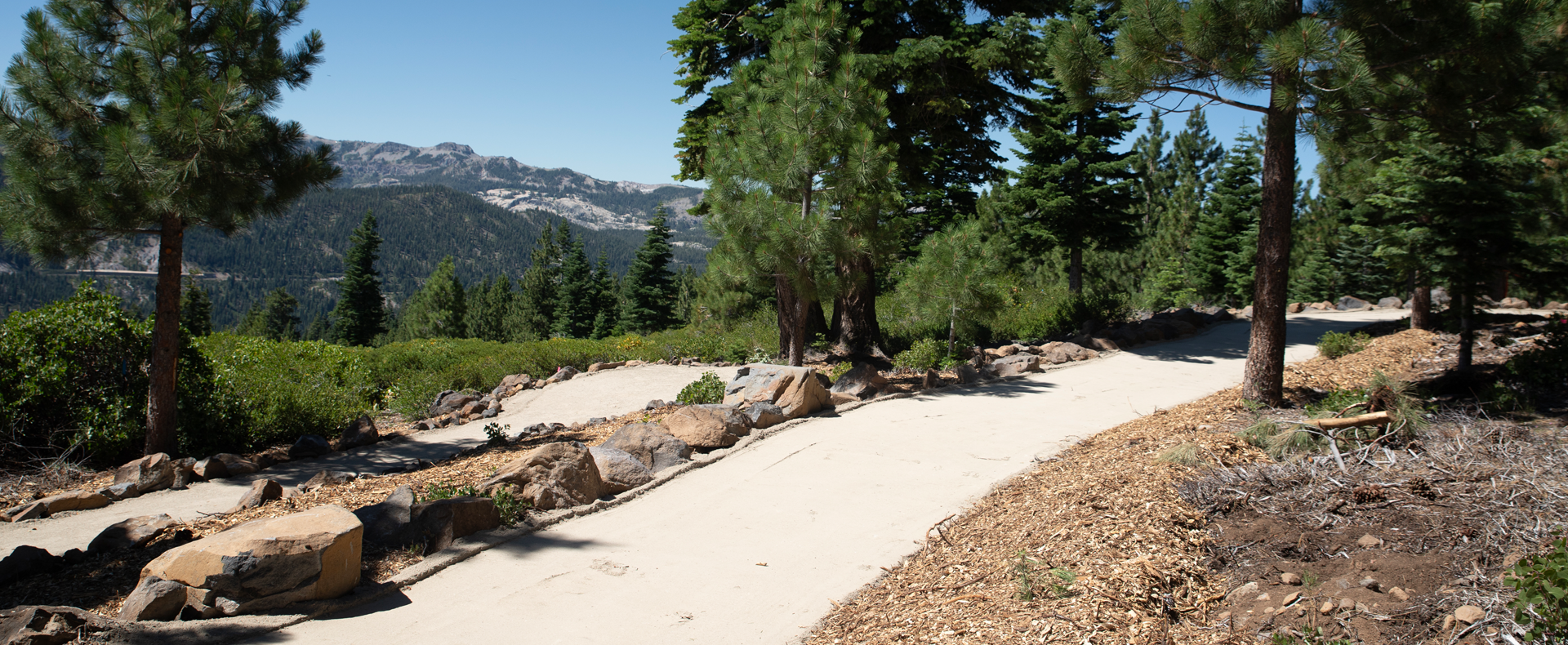
Included in the 2022 Trails Master Plan, the interpretive trail is the latest feature to enhance the popular Glacier Way trailhead. Last summer, the parking lot was expanded to alleviate overflow parking on residential streets, and a permanent restroom facility was installed for the comfort and convenience of trail users. Once completed, the relatively flat, five-foot-wide and half-mile-long walking path of decomposed granite will loop through 50 acres of forested land immediately off the trailhead.
The trail is intended to create a tranquil and immersive nature experience while remaining accessible to leisurely walkers, strollers and anyone using adaptive devices to support mobility. Featuring vistas, benches, passing/rest areas and educational signage highlighting local flora and fauna and other unique facts about the land, Tahoe Donner invited the Washoe Tribe to collaborate on the information included. As the original inhabitants of the area, dating back thousands of years, the association felt it appropriate to include their important history and heritage as part of the experience.

A Society Sustained by the Changing Seasons
The Washoe lived in accordance with the season’s offerings. Am suk (spring) began the yearly cycle, where the tribe’s winter stores of pine nut flour, seeds, dried meat, and some fresh fish and meat carried them over until their vegetable harvests of bulb plants and early grasses became available. As soon as weather permitted, the younger adults began to make their way to the shores of Lake Tahoe, where by Ci’ gah bet (summer), the rest of the tribe would gather to socialize and play games, fish and gather up the lake’s many offerings, including piñon pine nuts, acorns, berries, wild rhubarb, cat tail seeds, tiger lily seeds, sunflower seeds, wild onions, wild mustard, wild spinach, wild potatoes and sweet potatoes, tule root, wild turnips, wild celery, Camas flowers and countless other edible and medicinal plants.
During O’ osh (fall), they hunted small and large game: rabbits, squirrels, marmots, sagehens, quail, waterfowl, mule deer, antelope and big horn sheep, all fattened up from a summer of foraging on the plentiful vegetation. They harvested whitefish during their spawning season, taking mostly males so as not to disrupt the reproductive cycle and preserved their seasonal harvests for winter through drying, roasting or other methods. And once the bulk of their winter preparation was finished, they retreated to lowland valleys for warmer weather.
In Galais (winter), the Washoe settled into a more reclusive way of life in the lower-elevation Washoe Valley, with their immediate family members in their Galais dungal (winter houses). Around a campfire they shared stories and passed down generations of ancestral history, knowledge and traditions. Huddled together for the coldest months, they used this time to rest and rejuvenate. They built and repaired tools for hunting and fishing, wove baskets with wild grasses, or made clothing of buckskin and blankets from animal pelts. And they reinforced the familial and tribal bonds that allowed their subsistence lifestyle and culture to endure for nearly 12,000 years.
Though faint, echoes of the Washoe Tribe and their once-significant presence still linger throughout the area. Having integrated into mainstream society during the gold rush era and subsequent railway and logging industries, or having migrated to tribal lands on the outskirts of their once vast territory, the remaining Washoe work with federal and state agencies and private landowners to protect and preserve sites that remain important and sacred to their history and heritage.
Imparting Washoe Wisdom
Trails Manager Leslie Loveland worked with the Truckee River Watershed Council to invite members of the Washoe Tribe to incorporate their history into the Glacier Way Interpretive Trail signage. A fundamental part of the project, this important collaboration will allow trail visitors to learn about the Washoe’s ancestral connection to the land on which Tahoe Donner is built and gain an appreciation for the tribe’s enduring culture and heritage.
Loveland adds, “Working with the Washoe Tribe has been a truly enlightening experience. Learning about the history of the land directly from members of the Washoe Tribe, with the understanding that this knowledge has been passed down for thousands of years, is remarkable. We’re so privileged to now inhabit this place and become its stewards.”
A Place to Reflect
Designed with solitude in mind, the trail endeavors to be a quiet corner along the Tahoe Donner Trail System, a place to fully and peacefully immerse oneself in the forest’s tranquility, observe nature’s magic and mystique, or perhaps ponder how differently we live through and experience each passing season.
It is also a place to celebrate the rich history of the Washoe, the land’s original inhabitants and stewards, and reflect on how we, too, can live harmoniously with the environment and preserve our natural surroundings for generations to come.
About the New Trail
The Glacier Way Interpretive Trail is an accessible walking path suitable for leisurely walkers and those using strollers or mobility aids. The trail features vistas, resting/passing areas, benches and educational signage highlighting local flora and fauna, as well as Washoe history and heritage.
Trail Features
Trail Type: Loop
Length: 0.5 miles
Difficulty Rating: Easy
Elevation Gain/Loss: Less than 10 feet
Terrain: Flat, smooth, compacted decomposed granite material
Dogs: Yes
Bikes: No
Tables: Yes