


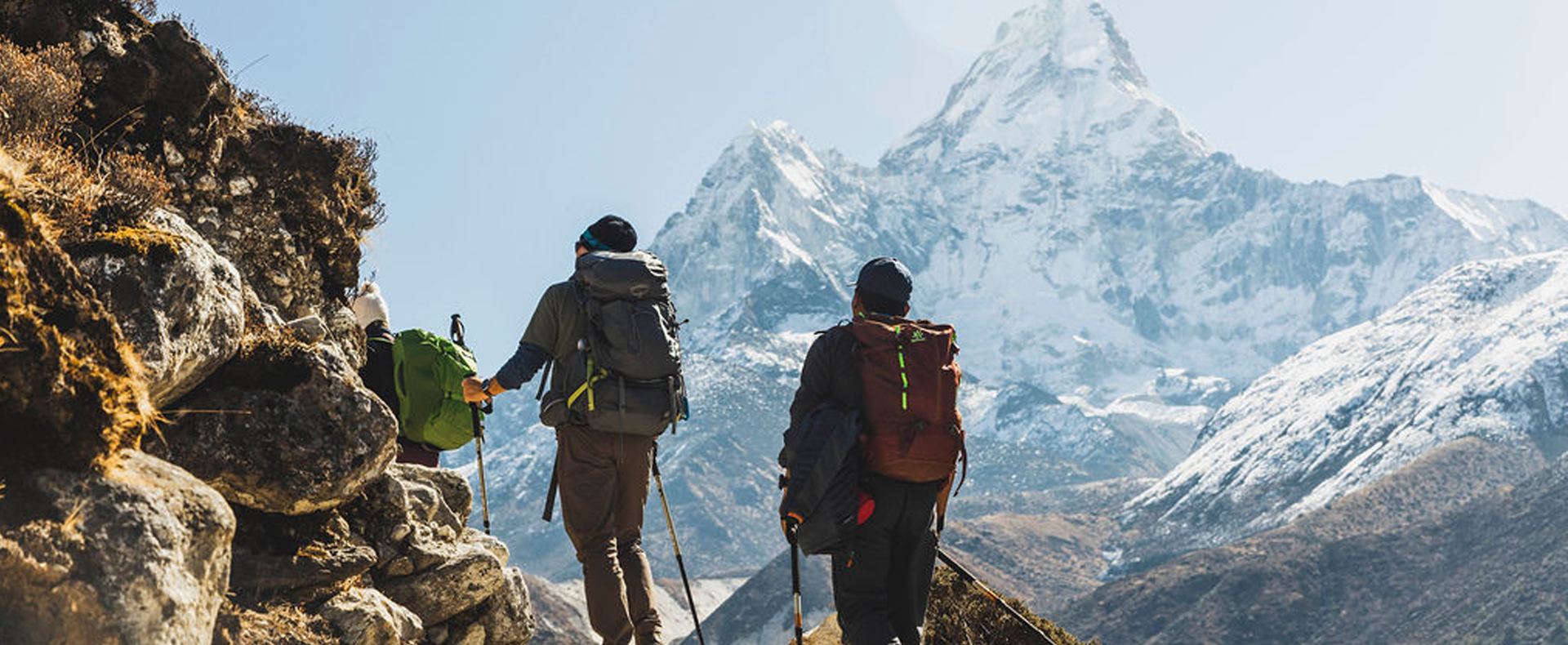
From Backyard Trails to Bucket List Journeys
Alder Creek Adventure Center, Alder Creek Cafe, Cross Country Ski Area, Downhill Ski Area, Member NewsWhy Tahoe Donner Adventurers Are Perfectly Poised for the World’s Greatest Treks
By Caroline Pemberton
Have you ever had a sliding door moment? One single, small event that quietly re-routes everything that comes next? Maybe it was a phone call that changed your plans, or a chance encounter that sent you down a different path. That feeling of what if I’d turned left instead of right? What if I hadn’t said yes to that trip?
For me, it came in the form of rejection. A month before I was set to leave for a job in Scotland, I got a call… the overseas gap-year position I’d been offered had been given away to someone else’s daughter. Just like that, my plans evaporated. I was left with a full year between high school and college, and nothing on the horizon.
Meanwhile, my brother Rex announced over the family dinner table that he wanted to become the youngest Australian to climb Everest. To his credit, he made it happen, and on a whim, I tagged along as his sidekick and Everest Base Camp manager. I was nineteen, with an abundance of time, a passport that needed stamps and a restless soul. I thought I was signing up for a two-month adventure. I had no idea that one simple “let’s go!” would change everything.
It was 2005. That Everest season was raw and vivid and unlike anything I’d ever known. The sound of avalanches rumbling down the valley, frozen air that smelled like stone and sun, a kaleidoscope of prayer flags fluttering against the world’s highest peaks. It was tough, too. The weather was fickle, the summit window uncertain and my brother’s dream hung in the balance. It was also the first time I’d seen a dead body – a climber had fallen into a crevasse and couldn’t be rescued in time – a devastating reminder of the fragility of life.

Rex on Everest Summit Ridge, 2005. Photo provided by Caroline Pemberton.
Against all odds, on the very last day of the season, my brother summited safely. At just twenty-one, he became the youngest Australian to stand on top of the world. Over a crackling radio, he told me, “It’s not the summit I stand on that I can see, but all the others out there waiting to be climbed.”
When he descended, we threw a huge celebration. Somewhere between the music and the tipsy laughter, while dancing with our Sherpa friends, I locked eyes with a rugged, sunburnt American mountain guide. Twenty years later, he’s the father of my children, my business partner and the reason I traded Sydney’s Northern Beaches for the ski slopes of Tahoe Donner. A home ringed by pine trees at 6,500 feet, where the air is still thin enough that my lungs remember Everest.
Caroline and Mike meeting in Everest in 2005. Photo provided by Caroline Pemberton.
Mike Hamil Everest Summit Proposal. Photo provided by Caroline Pemberton.
Every time I head out for a morning ride or ski along the trails behind our house, I think: this place, this life, all of it, traces back to one single “yes” twenty years ago at the foot of the world’s tallest mountain.
It’s all my brother’s fault, really.
As a result of that sliding door moment, that rugged mountain guide and I went on to found Climbing the Seven Summits, an expedition company operating on every continent, from the heart of Antarctica to the summit of Everest. After guiding thousands of climbers at the most extreme altitudes, we’ve learned a thing or two, and there’s one thing for sure: living up high quietly transforms you.
It’s not visible, but your physiology puts you at a very distinct advantage. Your lungs are stronger, your red-blood-cell count is higher and your body is more efficient at using oxygen. It’s the same process climbers spend weeks chasing on acclimatization rotations in the Himalaya. For us TD locals, it happens while we’re doing the grocery run at Safeway. Whether you’re hiking up Hawk’s Peak or walking the dog along Alder Creek, your body is always altitude training.
We’ve got an edge. We are preconditioned for the world’s greatest trekking and mountaineering adventures before we’ve even booked a flight.
Come summer, our trails wind through alpine meadows and granite ridgelines that could just as easily belong in the Andes or the Himalaya. Those long, dusty climbs that leave you breathless at the top? Perfect rehearsal for summit day on Kilimanjaro or your final approach to Everest Base Camp.
Then winter rolls in, and we don’t stop, we just swap gear. Cross-country skiing, snowshoeing, touring – it’s the same muscles, the same mindset: moving uphill, respecting the weather, finding beauty in the grind and feeling the true satisfaction of earning your turns (or your views).
We hit the prerequisites as part of daily life. Beyond that physical readiness, we also have grit. We’re used to Type 2 fun (hard in the moment, great in hindsight). We’ve learned a little discomfort isn’t something to avoid; it’s where the best stories come from. That mountain mindset, equal parts optimism, pragmatism, and adaptability, runs deep here. It’s the same trait I see in our most successful Everest climbers: the ability to pivot plans, hunker down through a storm, keep moving when the trail kicks up, appreciate the challenge and share snacks and sunscreen with whoever’s beside them.
Our garages are already full of the gear, our lungs are already conditioned and our backyard trails are the perfect training ground. Between the boots, poles and the three different versions of the same puffy jacket (each one totally essential, of course), we’re adventure-ready without even realizing it.
By living here, you’ve checked every box of preparation and playfulness; all that’s left is to make the decision to go.
So, what’s on your bucket list? An Everest Base Camp trek? The Inca Trail to Machu Picchu? A Kilimanjaro climb? Or something wildly ambitious, like an Everest summit climb?
If this has your heart homing in on unfulfilled dreams and you feel that tingle of excitement, here’s how to start turning those dreams into a plan.
Step 1: Commit to your goal and set a timeline
Choose an objective that feels right in your heart. You’ll need passion to stay consistent in your training. Set a date six months to a year out, depending on your current base fitness. Put down a deposit so you can’t procrastinate – money down = heart in.
Trekking in ithe Himalaya. Photo provided by Caroline Pemberton.
Step 2: Start in our backyard
Tahoe Donner and Truckee offer some of the best training grounds in the world for building strength. Start small and build gradually:
Begin with the Donner Lake Rim Trail South Loop, a moderate 3.7-mile hike where you can test layers, manage pace and break in new boots while enjoying sweeping views of Donner Lake along the way. Next, take on Frog Lake Overlook, a roughly 6- to 7-mile round trip with 1,500 feet of climbing and big alpine vistas. Then, graduate to Shirley Canyon and High Camp, a local classic with about 2,000 feet of vertical gain, granite steps and a well-earned summit view (plus the option of the tram ride down!). When you’re ready for a true local epic, the Sugar Bowl-to-Palisades traverse is about 13 miles and 3,000 feet of gain; a full-day ridgeline adventure that builds endurance, pacing, and mental stamina.
Bad knees or ankles? Break them in gently. An easy trick is to carry water up in containers, dump it at the top and then hike down. Over time, keep more of that water weight on the descent to gradually strengthen joints and stabilizers until it is comfortable to carry both ways.
In winter, swap boots for skis or snowshoes. Head out from the Tahoe Donner Cross Country Ski Center to go snowshoeing, or Nordic ski down to Euer Valley and back up. For backcountry skiers, tour Sunrise Bowl, dropping over the back into Johnson Canyon and then skin back up for a victory lap. Some of the best mountaineers on Earth rely on Nordic and backcountry days like these to stay expedition-ready all year long.
Each of these adventures develops the same instincts you’ll rely on in the world’s great ranges: steady pacing, smart layering, fueling often and reading weather and terrain. The best part? You don’t need a plane ticket to start.
Between outdoor forays, continue to build core strength, flexibility and aerobic fitness at Trout Creek Recreation Center. It’s well equipped, offers great classes and keeps you social and accountable.
Step 3: Take the guide’s advice.
After guiding hundreds of climbers to the top of the world and thousands more on treks, I can tell you that success rarely comes down to fitness or fancy gear; it’s the small things that matter.
The people who thrive aren’t the fastest; instead, they’re the ones who practice self-care as a strategy:
- Drink before you’re thirsty.
- Eat early and often.
- Reapply sunscreen even when it’s cloudy.
- Layer before you’re cold; delayer before you’re sweaty.
- Protect your sleep.
The goal is simple: stay healthy on the hill. It’s far easier to maintain balance than waste energy clawing your way back to it.
Trekking in Nepal. Photo provided by Caroline Pemberton.
Here’s a secret from the guiding world: watch what your guides do. The best ones have a thousand tiny habits that keep them strong, safe and smiling – tricks learned from long days and nights on expedition. When a guide offers advice, take it in. Try it out. You might be surprised at how much a simple tweak, like how you pack, pace or breathe, can change everything. We’re all still learning out there. That’s part of the everlasting joy of it.
Beyond all that, it comes down to purpose. The single biggest predictor of who makes it to the summit isn’t physical at all; it’s why. The people who show up with a reason deeper than ego or social media are the ones who go the distance. Maybe it’s a once-in-a-lifetime, multi-generational trip, a chance to pass down wisdom and strengthen bonds between generations. Maybe they’re honoring someone they love by rediscovering what’s important after a big life change. Or maybe they’re finally giving themselves the gift of adventure, doing something they’ve always dreamed of but kept postponing while working, parenting or caring for others. When things get hard (and they always do), that purpose is what keeps them moving forward when others stop.
Trekkers in the Himalaya. Photo provided by Caroline Pemberton.
Mountains don’t care if you summit. They strip away comfort, control and ego, and in doing so, reveal who you really are. That’s the beauty of it. It’s not the outcome that counts, but who you discover yourself to be on the way up.
It’s why I love living here so much. Life in Tahoe Donner isn’t separate from those lessons, but a daily practice of them. Every ride, hike or skin track is its own little expedition. Every storm is a reminder to prepare, adapt and respect nature.
Twenty years after that first season on Everest, I’ve come full circle. From the world’s highest peaks to this alpine home, the same spirit of adventure still fuels me. Tahoe Donner is my base camp now: the place where every great journey begins.
Backyard to Base Camp Live Q&A
Ready to get your bucket-list adventure going? But unsure where to start?
Join Caroline at the Alder Creek Adventure Center on Friday, Jan. 30, from 5:30-6:30PM for an informal evening of connection and adventure as part of the TDXC Winter Speaker Series. Share stories, gain inspiration and come away with practical advice.
Caroline will share lessons learned from her work alongside her husband, world-renowned guide Mike Hamill (six-time Everest summiteer and author of Climbing the Seven Summits), and from helping thousands of climbers prepare for life-changing journeys. Now she’s bringing that expertise home to Tahoe Donner to help you plan your own. Open to all.
Bring your questions and your curiosity.
Author Bio:
Caroline Pemberton is a former Australian TV presenter turned adventurer. She is co-owner of Climbing the Seven Summits & Rugged Luxury Expeditions, which redefines what it means to explore the world in comfort, connection and style. She lives in Tahoe Donner with her husband, world-renowned mountain guide Mike Hamill, and their two young children. When she’s not planning Everest expeditions, you’ll find her skiing the backyard trails or teaching a fitness boxing class for fun at the Rec Center (6:30AM on Tuesdays and Thursdays).